Understand the numbers behind the calculation.
Explore trusted aircraft-performance manuals, recommended reading and videos covering takeoff, landing, runway conditions, limitations and operational performance.
Learn while you calculate.
VPT is designed to help you understand aircraft performance as you use it — with contextual guidance built into the app and short performance facts displayed during calculations.
Guidance where you need it.
Throughout VPT, the info icon opens contextual explanations directly beside the relevant inputs, limits and results.
This lets users understand what a value means, why it matters and how it affects the calculation without leaving the app.
Learn something every time you calculate.
VPT displays short aircraft-performance facts during calculations. Try one here.
Examples from the performance knowledge built into VPT.
Learn why the numbers change.
Aircraft performance is shaped by aerodynamics, weather, runway conditions, aircraft limitations, obstacles and operational requirements. These references explain the principles behind many of the calculations reproduced by VPT.
Getting to Grips with Aircraft Performance
Publisher: Airbus
A comprehensive Airbus reference covering the physical, regulatory and operational aspects of aircraft performance. It explores flight mechanics, operating speeds, takeoff and landing performance, aircraft limitations, environmental effects and performance optimization.
Aircraft Performance — Pilot's Handbook of Aeronautical Knowledge
Publisher: Federal Aviation Administration
A clear introduction to aircraft-performance fundamentals, including atmospheric effects, density altitude, climb and range, runway surface and gradient, takeoff and landing performance, performance charts and transport-category aircraft considerations.
Flight Manual Performance
Publisher: Nick Richardson
A practical guide to reading and applying AFM performance data, covering takeoff limits, V1, obstacle clearance, engine-out climb, landing performance and rejected takeoff considerations for transport-category jet aircraft.
Aircraft performance, from the pilot's perspective.
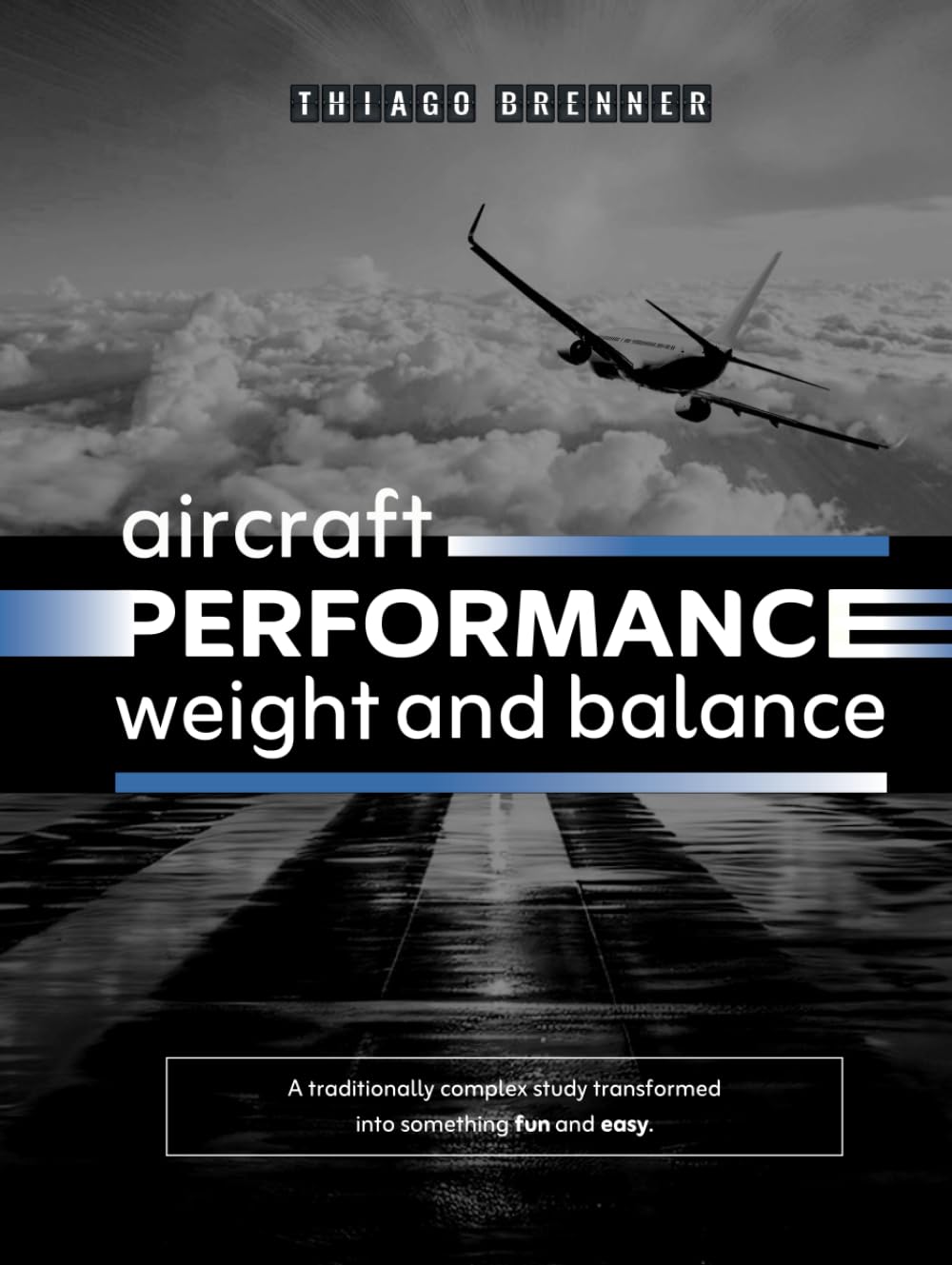

Aircraft Performance Weight and Balance
By Capt. Thiago Lopes Brenner
Aircraft Performance Weight and Balance explores the physics of flight, jet-engine propulsion and the principles and regulations behind aircraft performance.
Focused on Class A aircraft, it covers the full flight from basic aerodynamics and weight and balance through takeoff, enroute and landing performance, together with subjects such as cold-weather operations, ETOPS and runway pavement limitations.
It is suitable for professional and student pilots, flight dispatchers, aeronautical engineers and aviation enthusiasts who want a deeper understanding of the theory behind operational performance calculations.
I’ve been in touch with Capt. Thiago Lopes Brenner and bought the book myself. It is a genuinely useful reference for anyone who wants to understand the theory behind the performance calculations VPT presents.
VPT in practice.
Videos from real pilots and flight-simulation enthusiasts show how VPT is used in real flight-simulation workflows.

A Must Have for your Personal EFB | Virtual Performance Tool v2 First Look | Real Airline Pilot
A330Driver
A first look at Virtual Performance Tool v2 from a real airline pilot, covering how it fits into a personal EFB workflow.
More VPT videos.
These videos feature VPT 1.0. The interface has since evolved, but many of the aircraft-performance concepts and workflows shown remain relevant.

Takeoff Performance Calculation (Short Version) | Real 737 Pilot explains
A330Driver
Watch on YouTube
Virtual Performance Tool for flight Simulator
Flight Sim Broadcasting Network-FSBN
Watch on YouTube
PMDG 737-700 for MSFS - Tutorial 5: Final CDU Preflight and takeoff performance calculation (new)
A330Driver
Watch on YouTubeMore current VPT 2 tutorials and independent videos will be added over time.
Ready to see a real calculation?
16 airports included. No credit card required.
Virtual Performance Tool is intended exclusively for flight simulation and training purposes and is not approved for real-world flight operations.